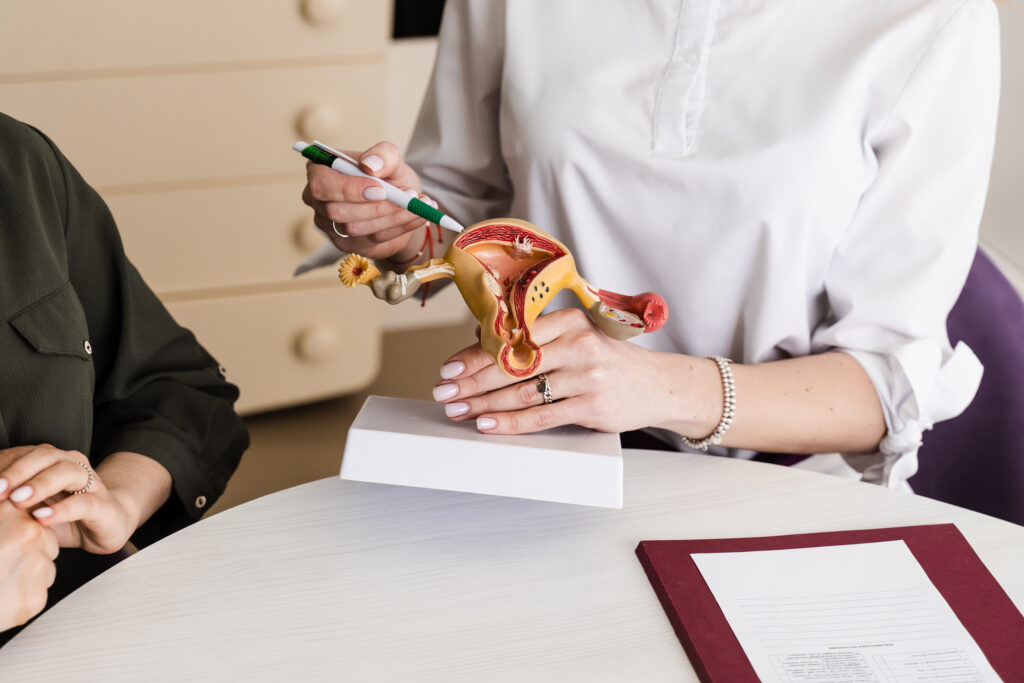
Many women hear about adenomyosis and endometriosis, but knowing the difference is important. Both conditions affect the uterus and can cause pain or heavy periods. However, they are not the same. In this blog, we explain adenomyosis vs endometriosis: what is the difference, how they affect you, and what you can do about them.
What is Adenomyosis?
Adenomyosis happens when the tissue that lines the inside of the uterus grows into the muscle wall of the uterus. As a result, the uterus may become larger and more tender. Often, this condition leads to heavy periods and pain. Although it can affect women of any age, it is more common in women between 35 and 50 years old.
What is Endometriosis?
Endometriosis is a condition where tissue similar to the lining inside the uterus grows outside the uterus. For example, it can grow on the ovaries, fallopian tubes, or other organs in the pelvis. Because this tissue acts like the lining of the uterus, it can cause pain, especially during periods. Endometriosis can also lead to problems with fertility.
Key Differences Between Adenomyosis and Endometriosis
Although both conditions involve tissue from the uterus, they are different in several ways. Here are the main differences between adenomyosis and endometriosis:
Symptoms Comparison
Both conditions can cause similar symptoms. However, there are some differences. Below is a comparison of adenomyosis symptoms vs endometriosis:
Causes and Risk Factors
Doctors are not sure what causes adenomyosis or endometriosis. However, some factors may raise your risk. For instance, having a family member with these conditions can increase your chances. Other risk factors include:
Although the exact cause is unknown, hormones like estrogen may play a role in both conditions.
Diagnosis Methods
Doctors use several methods to find out if you have adenomyosis or endometriosis. First, they will ask about your symptoms and medical history. Next, they may do a pelvic exam. In addition, they might use imaging tests such as:
For endometriosis, sometimes a minor surgery called laparoscopy is needed. This helps the doctor see and sometimes remove tissue outside the uterus.
Treatment Options
Treatment for adenomyosis and endometriosis depends on your symptoms and if you want to have children. Options include:
Although these treatments can help, they may not cure the condition. Therefore, it is important to talk with your doctor about the best plan for you.
Lifestyle Tips and Management
Besides medical treatment, some lifestyle changes may help manage symptoms. For example:
While these tips may not cure the condition, they can improve your quality of life.
Prevention and When to See a Doctor
At this time, there is no sure way to prevent adenomyosis or endometriosis. However, knowing the symptoms can help you seek help early. You should see a doctor if you have:
Early diagnosis and treatment can help manage symptoms and prevent complications.
In summary, understanding the difference between adenomyosis and endometriosis is key to getting the right care. If you have symptoms, do not wait. Consult a gynecologist for personalized advice on adenomyosis or endometriosis.